Episode Transcript
[00:00:05] Speaker A: There you go. Greg's not even here and we're already getting the. The Travis soundboard, which is just Travis. So
[00:00:12] Speaker B: Travis is a soundboard.
[00:00:14] Speaker A: He is a soundboard. Living
[00:00:15] Speaker B: soundboard.
[00:00:17] Speaker A: It's. It's kind of crazy.
Greg can't come tonight. Of course. I was sick last week, so Travis and I missed out on recording and talking about Jean Luc Picard, which is. We're gonna do it. A future date because we were sad. And I picked out a book called Ghosts and Travis said it had. What kind of art, Travis?
[00:00:35] Speaker C: Timed New Roman art.
[00:00:36] Speaker A: But the story's good.
[00:00:37] Speaker B: Okay.
[00:00:39] Speaker C: It's what I call the comic book art, where the art brings nothing to the narrative and is literally just the part of the words on the page so that you just get to hear the story, see the story.
You'll be excited when
[00:00:53] Speaker A: we're
[00:00:53] Speaker C: about it. There's nothing bombastic. There's nothing overly creative. It is just delivering what the text is.
[00:01:02] Speaker A: We may. We may indeed cover that book next week. It'll be really exciting to talk about the art, but the story was real good.
[00:01:07] Speaker B: Okay.
[00:01:08] Speaker C: Yeah. It's the non fiction of comic book art.
[00:01:16] Speaker A: This way. Ty talks about your book,
[00:01:17] Speaker B: Brian.
Yeah. Great.
[00:01:21] Speaker A: Just wait till he talks about your book. Well, I'll let Travis and Brian introduce themselves in a minute. You've met both of them before. But, you know, since I don't expect everybody, but I just. Brian, I wanted to let you know I have a orange. Old orange Manhattan here. So I did some.
I did some bourbon, I did a little orange bitters. I did some vermouth. I did a little tiny bit of orange juice in there just to celebrate your book. I will get into it in a minute. So we're. We're all ready to go for some film noir here in a second.
Couple things before they introduce themselves.
[00:01:55] Speaker B: Okay.
[00:01:57] Speaker A: Number one, I got this really cool thing from Ron Randall.
[00:02:00] Speaker B: Oh, nice.
[00:02:02] Speaker A: So we're off onto some Trekker. If you don't follow Ron Randall and Trucker, just start looking at Kickstarter. He gets these things ready. He pumps them out.
[00:02:10] Speaker B: Ron is a great guy too.
[00:02:13] Speaker A: And Travis, he helped you out with Kickstarter too, didn't he?
[00:02:16] Speaker C: He taught me everything I know. He helped me out before Kickstarter. Like Zach and I used to be at the periscopes. Used to be helioscope, but periscope. Is it helioscope now? He used to be periscope. I get confused. I don't mean that as a bad way. I just. It's been a while. Since I thought about it, but he was always Zach and I always got the table on their island with their staff for years. We'd always take up their extra space.
[00:02:39] Speaker B: The very first podcast I ever got to participate in was with Rob, Randall and Travis.
And, like, I got to ask him some questions and he helped. He helped me make Nighthawks, actually, because I asked him about, you know, writing and creating and how to. How to put it all together. And he gave me some really good advice.
[00:03:00] Speaker A: It's just amazing that he is. His dedication to Trekker, and I'll throw this back up here so people can. I've never seen it, but his dedication to this book is truly amazing. I mean, he started writing Trekker stories in the 80s.
[00:03:14] Speaker B: Yeah. Room
[00:03:14] Speaker A: one. And he is still telling the story.
And, you know, if you want an inclusive story that doesn't force inclusion.
[00:03:24] Speaker B: Yeah,
[00:03:25] Speaker A: that's one of the ways I can talk about his characters. His characters are really natural. I remember hearing actually, uh, I. At Grit City Comic Con. Thank. Thanks, everybody for showing up. Fantastic Con this last weekend, uh, I was in the dollar bins and I found some John Sable Freelance by Mike Grell. And. And same thing. I heard Mr. Grell asked once about somebody. I was just standing there talking to him. Somebody asked him, you know, about having gay. A gay character in John Sable.
And he said, I never thought about having a gay character in John Sable. I just thought that gay people existed.
And I'm like,
[00:04:00] Speaker B: yes,
[00:04:01] Speaker A: like,
[00:04:01] Speaker B: exactly.
[00:04:02] Speaker A: That's how you write people into stories. Yes.
You know, you don't have to force it. You just write the story as if people exist. Congratulations. So
[00:04:13] Speaker B: love
[00:04:14] Speaker A: that. Love, love doing that. Also, I. For my birthday, I got really sick, but I was down in Monterey and I went to Current Comics.
Fantastic shop. I don't know if we can see there.
[00:04:26] Speaker B: There it is.
[00:04:26] Speaker A: There we go.
They have a. It looks like they have a. A shop in Selenas as well.
But they were fantastic. Love chatting with them. Went in there. I got into the $2 books there. I got into some other books and I found.
If you listened back on episode 335, Greg and I covered this, but I found a copy of Destroyer Duck Number one.
[00:04:47] Speaker B: And
[00:04:47] Speaker A: why is that important now? Most of the Destroyer bite.
Most of the Destroyer Duck books are worth a dollar.
This one, however, is worth more because it had the first appearance of Gru the Wanderer in it.
[00:05:01] Speaker B: No.
[00:05:03] Speaker A: And so I found this. And this was my birthday present to me.
[00:05:07] Speaker B: Wow. Nice. Happy birthday to you, man.
[00:05:11] Speaker A: And so, yeah, found a couple other things that were fun.
These ones still have the price tags on them, but found some.
[00:05:21] Speaker B: Come on, me.
[00:05:25] Speaker A: Travis is dying right now. What's wrong, Travis?
[00:05:27] Speaker B: Watching him pull his eyeballs on.
[00:05:30] Speaker A: What's wrong with Destroyer Duck? Travis,
[00:05:32] Speaker C: I thought you were going to do the history of Destroyer Duck like you did in the podcast link 10 years ago.
[00:05:36] Speaker A: Now that's episode 335 or 333. You can go back and listen to
[00:05:40] Speaker C: that. Remember? That
[00:05:44] Speaker A: was fantastic. Yeah, I'm more commandy here. Look at. Here we go.
Had a great time.
[00:05:52] Speaker B: So awesome.
[00:05:53] Speaker A: So great shot. Highly recommend it. I don't know about the Salinas branch. I assume it's just as good, but I had a great time talking to the staff there and super welcoming, super friendly.
Went into another comic shop in Monterey, which I'm not going to name because I walked in there and the guy went,
[00:06:10] Speaker B: hi,
[00:06:10] Speaker A: people.
Let me sit at the counter.
[00:06:14] Speaker B: Good Lord.
[00:06:15] Speaker C: Do you see that? Or did he just act like that?
[00:06:17] Speaker A: That's what he acted like, and it's mine. I
[00:06:20] Speaker C: did that same thing to Robin Williams one time. So he could have just been high.
[00:06:24] Speaker A: Yeah, it's entirely possible, but it wasn't a very welcoming shop. It was more like, we've got stuff. Go look.
[00:06:30] Speaker B: I had that experience up in Portland, and then I went back years later. I talked to a different person there, and it was the completely opposite experience.
Maybe give it another shot if it happens twice.
Fair point.
[00:06:43] Speaker A: But current at comics, we have issues. Love the. Love their name.
[00:06:47] Speaker B: That's a great.
[00:06:48] Speaker A: Yeah, fantastic. So love to talk about cool places to go. So, Brian, you're back. Tell us why
[00:06:55] Speaker B: I'm so happy to be back. My book, Nighthawk, finally. Finally came out. My. Oh,
[00:07:02] Speaker A: is that Nighthawk? This.
Where's Travis's? Does he even get it out?
[00:07:10] Speaker B: I don't think he heard you.
Yeah, we. We did the Kickstarter.
[00:07:14] Speaker A: Do you have this book, Travis?
[00:07:19] Speaker B: I mailed it to you. There you go.
[00:07:21] Speaker C: Oh,
[00:07:21] Speaker B: okay.
Yeah, the Kickstarter went really well. Better than I had hoped. It was a hugely educational experience. Because I didn't do the stretch goal properly, I had to kind of do all that manually on the back end.
Just like we hit the stretch goal.
Shit. I have no way of tracking this. I'm gonna have to just like, okay, I'm dropping the matchbooks into the. Into the packagings.
But yeah, I mean, what can. What can I tell you about the book?
[00:07:56] Speaker A: Well, I don't know. I mean, we read it, so we probably should talk about it. I mean, it's It's.
[00:08:00] Speaker B: By the way, I do have to say I love that you're having a highball, because Travis will attest to this. One of my early ideas for a reward for the Kickstarter was to have the Nighthawks logo branded on a highball glass. And just like
[00:08:17] Speaker A: I
[00:08:18] Speaker B: do a top tier reward. Did it on
[00:08:19] Speaker A: one of these. These cups with a brand cover up.
[00:08:23] Speaker B: Okay.
[00:08:25] Speaker A: I've already covered up the company's name that's on here, and I'm covering up the other.
But if you happen to do that, I would
[00:08:32] Speaker B: love
[00:08:32] Speaker A: that.
[00:08:33] Speaker B: I'll keep that in mind. I probably
[00:08:35] Speaker A: pay for that.
[00:08:35] Speaker B: I found out. I'll look
[00:08:36] Speaker C: them up for you.
[00:08:38] Speaker B: Shipping matchbooks through the mail is a little tricky. And you can. I
[00:08:44] Speaker A: wondered about
[00:08:44] Speaker B: that internationally.
So I had to drop a little. Little sum extra into the two international customers I had.
One in Canada, one in Mexico, and an apology note to say, like, I'm sorry, I can't. I can't send you a matchbook, but USPS won't do it.
[00:09:03] Speaker A: Well, my favorite thing about Nighthawk is it funded while we were recording with Brian last time.
[00:09:07] Speaker B: That's right. That's right. You guys were the ones who told me that, like, we hid funding, like, right at the end of the podcast. It was amazing you have that recorded because I'm sure my reaction was hilarious.
[00:09:20] Speaker A: We were. We were all here and. Yeah. So first off, first off, I want to get into film noir with you because we
[00:09:30] Speaker B: kind of
[00:09:31] Speaker A: brushed it last time. Yeah. And we didn't get to spend a lot of time talking about it. But first off, you weren't wrong. This cover is kind of hard to show on camera because it's shiny,
[00:09:40] Speaker B: which makes
[00:09:41] Speaker A: it awesome.
[00:09:42] Speaker B: The gloss.
[00:09:43] Speaker A: But Valentine Barker did a fantastic job on this cover.
[00:09:49] Speaker B: Yes.
[00:09:49] Speaker A: And if.
If you've never seen Valentine's art, like, he does, like, his comics, but also, like, really cool, you know, political, I guess, political adjacent.
[00:10:05] Speaker B: Yeah. Those. The. The Girl Power prints that he does and stills at the con that.
It's funny because I had bought more than one of those from him at cons without realizing who he was.
So, like, I had met him at, I think it was an Emerald City Comic Con, and I got one for a friend of mine who's a therapist and she hangs it on her wall while she's having sessions to, like, help her clients out. And it's one that just says, like, self care is mandatory.
And later when I met him looking for a cover artist and we started working together, like, he came up with this he was beautiful. All of it was great. And then when I saw him at Road City that year, I went up to his booth and I saw all the rest of his work and I was like, oh my God, I already love you. Like, these are amazing.
I can't believe I'm work. Like, this is you and I get to work with you. This is great. And he is one. He's just one of the nicest guys. He's incredibly accommodating, he listens, he works well, but he's also a phenomenal artist. I.
It was funny. Rose City this year I met Kelly Sudaconic and gave her kind of like a sneak preview copy and she saw Valentine's name. She's like, oh my God, I love Valentine.
He painted a really cool picture of me and I'm like hanging in my office and I'm like, that's such a great story that he's just so well known and I'm so lucky to get to work with him, to just be like, Val, thank you for letting me into your world and doing all of this great work. Because he. I can't say enough good things.
[00:11:46] Speaker A: Yeah. And I mean delivers here. Yeah. With the.
Gets you into the theme before you're starting, right? Yes. There's.
There's a feeling to this and I, I like the COVID because you, you, you start to know what you're getting into as you get in.
You don't hold it off. For me, it's just, it's here.
[00:12:07] Speaker B: What I love too is he, he's doing the covers for all three books. So this is one and three, Book two, we've already seen the COVID for. And it. Similarly, you'll look at it and you'll get an idea of what's inside.
Like he's, he's keeping the theme up. Not going to spoil anything, but he's, he's keeping it going.
[00:12:28] Speaker A: You. Yeah, I know. Three issues, huh?
[00:12:31] Speaker B: Yeah. So chapters one and two in the first issue. Book two is going to be three and four. Book three is going to be five, six and seven. Because it is a seven issue series.
[00:12:41] Speaker A: Well, this kind of has like two and a half chapters.
[00:12:43] Speaker B: You think so I first.
[00:12:45] Speaker A: Well, you got the intro. Yeah, you got an intro.
[00:12:48] Speaker B: Oh, that's true. I did do the intro. Because I got
[00:12:52] Speaker A: a little intro here and it's.
This is a substantial book. It's not,
[00:12:58] Speaker B: I mean. Yeah, it's a double issue.
[00:13:01] Speaker A: It's not lightweight.
[00:13:03] Speaker B: A lot of people recommended that I do that. Just because you're always trying to find A balance, especially as a new creator. What I was told is you want to put out a book that's small enough, like in terms of like page count, that you're going to scare off people from buying it. You got to have it at a reasonable price. But you also want to have multiple issues to build up a following.
Travis was a great example for this with Starlight 6, seven issues. And I was like, okay, cool. So I don't know if I can do that many because some people have said that if you do too many issues, you'll lose people. Travis, you actually warned me about that. Like, don't do too many, otherwise you're really going to be fighting for those last couple issues.
That's why I do three books.
[00:13:50] Speaker A: Well, I mean, for Travis, I mean, let's be honest, when you do what you do to people in issue five, I don't know how you expect to get anybody to read issue six and seven. And I mean, that's just the way it is, Travis.
So, you know, I understand when you cause trauma, it's hard to get people to buy. And
[00:14:12] Speaker B: Travis is proud of the trauma that he causes. Like, we've seen the ads on Kickstarter talking about the trauma inducing graphic novel theory.
[00:14:29] Speaker A: Yeah, I mean, you know,
[00:14:31] Speaker B: but this book, like, I listened to a lot of jazz and a lot of like the soundtrack to La Noire and a lot of Miles Davis while I was writing it.
[00:14:41] Speaker A: Now how many cigarettes did you smoke while writing this book?
[00:14:45] Speaker B: Not enough.
I actually had quit, so believe me, I wanted to be smoking a lot more while writing it. That's why, that's why I let our main character smoke as much as he does, is because I'm living vicariously through him.
Fun fact, I said it in 1951 because I wanted him to be smoking filtered cigarettes. Filtered cigarettes weren't in Bennett until 1951 though.
[00:15:09] Speaker A: Ah,
[00:15:11] Speaker B: he's going to be smoking filters, but 51.
[00:15:15] Speaker A: I'm already learning stuff already.
See this is.
So tell us about our other. The rest of our creative team here.
[00:15:22] Speaker B: Okay, so Matthias Faziani, I met him through like a Facebook group.
And initially I met him about a year before we actually started working together because I had seen some of his projects, posts just as an artist putting out there, like, hey, I'm available for work. Reasonable page rates. Here are a few of my projects. Here are a few of my works. And I loved his use of shadow, his black and white. Like just looking at the pictures and the, the silhouettes and everything that he puts together. His use of black and white in the negative space was exactly what I wanted. I could not be happier with him.
And he.
He lived in Otogwe.
I don't know how to pronounce it. I'm gonna say it really poorly. I'm sorry. The whitest pronunciation imaginable.
And. No,
[00:16:18] Speaker A: no, I would give you the widest pronounce. I would call it Uruguay, and that would be the widest pronunciation possible.
And I can't even say pronounce right now, so there we go.
[00:16:29] Speaker B: But, yeah, he. We worked out a deal long term where it was like, look, you're the guy that I want for all seven books. I'll just say right now, so let's. Let's work together. And he delivered. He absolutely knocked it out of the park.
There was. We talked to each other a lot about the process, and what I was hoping for, and what I really appreciated about his work, too, was I gave him the script, and he had no hesitation of reaching out to me to ask when there was a page that he thought could be better than how I designed or how I wrote it out in the script. So I would say, like, panel one this, panel two there.
And throughout the first few issues, he'd just be like, hey, so I'm reading this.
I don't think it makes sense. I think it can be a lot more dramatic if we do this in three panels instead of five. And I can capture it this way. And I would always just tell him, great, show me. Like, I'm the writer.
You're not trying to change the words of the story, but if you want to make it look better, you're the artist. I completely trust you. There were only two pages that are ever pushed back on him that I felt really strongly about in the script. Let me find them here.
So the first one is this page walking down from the.
From Mikey's house. And initially, he had done basically this three times.
And I was like, that, that's good. I mean, use some color and light and shadow and all that. It's beautiful. But I kind of sketched this out for him and drew the gutters on it. I said, this is what I'm thinking, though. This is what I had in mind when I wrote that page. And. And you can see the result. It's just. It's.
[00:18:07] Speaker A: I love that page.
[00:18:07] Speaker B: My thought, and just made it gorgeous. And then a couple of pages later, similarly, this. This is actually the opposite where I wrote it out and when he delivered, I was like, that is better than what I imagined. And that's when Kent goes from like the suburbs of New Jersey across the bridge into New York into his terrible neighborhood. And you could just see these three very clear distinct changes on the page.
[00:18:35] Speaker C: But there's a problem. I don't see any page numbers.
[00:18:41] Speaker A: You know, Travis, do you know what happens when books have page numbers?
Makes it really easy to reference the page and follow along.
[00:18:50] Speaker C: Yeah, Brian,
[00:18:53] Speaker B: you know, that would be. That was an artistic choice there we to not
[00:19:01] Speaker A: these artists.
[00:19:02] Speaker C: I'm just going to put this out straight up, Dan. We don't put these numbers most of the time.
It is very challenging on the printing process is why for building the book. Page numbers make things a lot harder. No one wants to deal with them now. 24 page. What?
24 pages?
[00:19:25] Speaker B: Yeah, 24 pages. Two or so 48 total.
[00:19:29] Speaker C: So 48 page. So on a 48 page book, you don't need to have page numbers.
Something like a 200 page book.
Maybe you need page numbers, but that's more challenging.
[00:19:43] Speaker B: Yeah,
[00:19:45] Speaker A: yeah.
Well, you know, page numbers are nice.
[00:19:51] Speaker B: Do I need to add page numbers to the next book?
[00:19:53] Speaker C: No, because.
[00:19:53] Speaker B: Okay.
[00:19:55] Speaker A: No, but when you do the graphic, you should.
[00:19:56] Speaker B: Okay.
And I appreciate you saying that, because I am. You tell
[00:20:00] Speaker C: your book builder to put page numbers on there. You do that.
[00:20:05] Speaker B: Okay.
[00:20:06] Speaker A: Yeah. I mean, honestly, I don't know where you put page numbers in this book because of all the shadows. So
[00:20:10] Speaker B: I would. I would say middle of the page at the bottom.
[00:20:14] Speaker A: Okay.
Yeah. Because you put them in,
[00:20:17] Speaker C: they going
[00:20:18] Speaker A: to mess stuff up.
[00:20:18] Speaker B: Yeah, the corners wouldn't work.
[00:20:22] Speaker A: Well, we're, you know, I want to. I want to talk a little bit about this book. I'll let you pitch it, but.
Yeah, well, pitch it. Pitch it before I say anything.
[00:20:30] Speaker B: So
[00:20:32] Speaker A: I'm just the lowly reader.
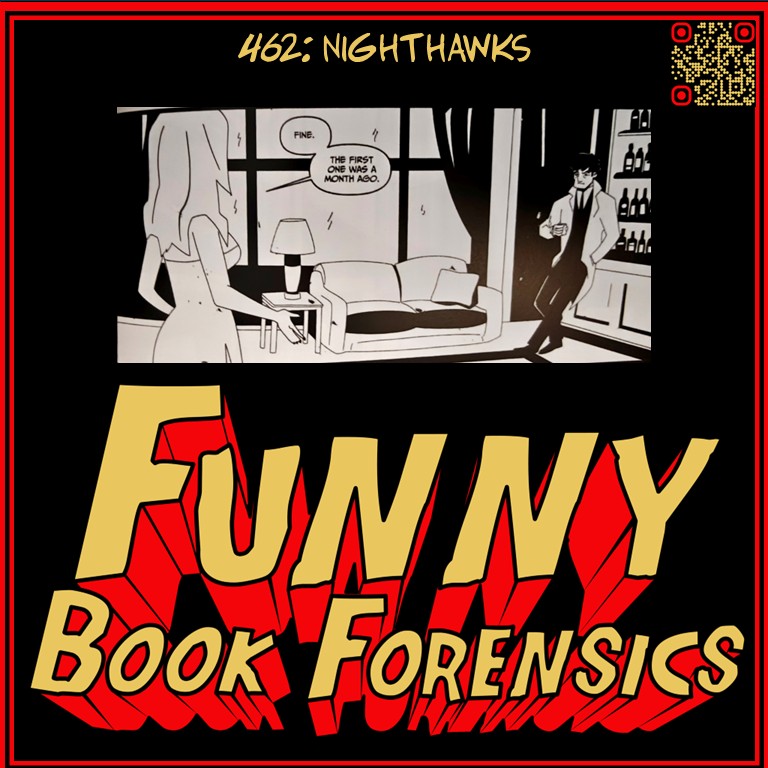
[00:20:34] Speaker B: Great. So the elevator pitch is Nanox Classic 1951 film noir Detective story. You've got dames, you've got detectives, you got gangsters.
It's a murder mystery set in New York and it's all focused around the iconic painting Nighthawks by Edward Hopper. Been remade a million times. It been most popularly done with, you know, like Elvis and Marilyn Monroe and James Dean. But it's the group of people sitting around a diner table in the middle of the night in New York.
It is my all time favorite painting and I decided I wanted to know who those people are and what's the story going on in that painting. So I wrote a whole series about it right here. Nighthawks.
[00:21:14] Speaker A: There you go.
And I'll. I'll throw up the.
It Might. It might. Sometimes these make it onto the podcast. I try, but I'll screw up the paint
[00:21:24] Speaker B: while
[00:21:25] Speaker A: we're talking about it.
[00:21:26] Speaker B: I love that painting.
I actually wrote to the Chicago Art Museum because they hold it and they hold, I believe, the rights to it. I don't know if it's actually still under copyright or if it's considered fair use at this point because it was painted in the 1920s initially.
[00:21:42] Speaker A: Well, I'll take it down really quick.
[00:21:43] Speaker B: Oh, no, it's fine. I get permission from them to use it.
I've got their email saved. I was like, I want to write a comic book around this painting. Can I use that? Am I going to violate it in copyright? Do I need to send you guys a check? And they were like, nope, we're an art museum. That's a piece of art.
Knock yourself out. You have our permission to use it. Great. Done.
[00:22:03] Speaker A: Nice.
[00:22:04] Speaker B: And that was what I showed to Valentine when I commissioned him for the COVID I said that every.
Every chapter is named after a different Edward Hopper painting that captures the feeling of the chapter. So chapter one here, conference at night. Like, if you go look up that Edward Hopper painting, I feel it matches kind of what goes on in this book. And then chapter two, summer evening, another Edward Hopper painting.
So every chapter is named after a different Hopper painting. And I gave all the names to Valentine. I sent him the full script to the whole book, all seven issues. And I said, I want you to read it. I want you to know what happens so that when you do the covers, you know what's going on. And he was amazing. He did all of his homework. I know we're coming back to Valentine just being amazing. Like, he did his homework. He knew how to capture it and absolutely just killed it. So
[00:23:03] Speaker A: I think it's okay to brag about your art team.
[00:23:06] Speaker B: Good.
I do also have to give a special shout out to Cara Rodriguez. She has taken on the role of. She originally came on just as, like, a graphic design kind of person working with us, because I didn't know how to take the pages that Maddie was sending me and, like, put them into a file, put them into a PDF or something to send to the printer. And so Kara came on and was like, yep, I'm a graphic designer. I know how to do all that. I'll take care of it for you. I'm like, okay, cool. So here is all of the raw digital art. And she built the comic. She was the one who picked the font for, like, the interiors. He did all these little crenellations and like the designs and the stuff around the edges here. Like she found and put all of these together.
This book would not exist without Kara and I cannot say enough good things about her. And in the meantime, she's read several of my other books as well and helping me put together a website.
Excuse me. And yeah, so Kara is just amazing.
[00:24:16] Speaker A: There you go.
So that's weird. I just lost the light.
[00:24:20] Speaker B: I don't know. Yeah, it's like film
[00:24:22] Speaker A: noir.
[00:24:22] Speaker B: Yeah,
[00:24:23] Speaker A: I know. It's like film noir now.
[00:24:24] Speaker B: Well, yeah, you can have some shadows. You know, we can't see what you're hiding.
[00:24:28] Speaker A: We build in some shadows now. We just.
[00:24:29] Speaker B: I love film so much. Like, I know everybody prefers. Okay, go ahead. Yeah,
[00:24:37] Speaker A: well, we're going to talk about the story. Tell us about. Like, I think when we had you on before, we mentioned a couple of film noir comics.
[00:24:44] Speaker B: Yes,
[00:24:45] Speaker A: but tell, tell me.
And randomly. I know, not film noir.
[00:24:49] Speaker B: Yeah,
[00:24:50] Speaker A: but we talked about this before. I. In the dollar bins, I found the first two issues of Cinder and Ash.
[00:24:55] Speaker B: I don't know that one.
[00:24:57] Speaker A: That is the. It's like a dc. Maybe you missed. Maybe it wasn't with you. Greg and I kept seeing advertisements for it in the, in the like 80s, late 80s DC books.
[00:25:08] Speaker B: Yeah. I never. Oh,
[00:25:10] Speaker A: and it, it's written by. It's written by Gene Cole or. No, it's written by.
Wait, is it Gene Colon with Louis. Jose Luis Garcia Lopez art. And we were like, but it's not a superhero book. And we're
[00:25:22] Speaker B: like,
[00:25:22] Speaker A: that's weird.
We're like, that's weird,
[00:25:26] Speaker B: Ashe. Right?
[00:25:28] Speaker A: Yeah.
[00:25:29] Speaker B: Yeah, you did tell me about
[00:25:30] Speaker A: it.
We're like, when are they not doing a superhero book together? Like, what kind of rarity is this? In fact, how many Jose Luis Garcia Lopez's non superhero books have you ever, either of you ever seen?
[00:25:44] Speaker B: Oh, none.
[00:25:45] Speaker A: Like, he's. He's. He did the whole DC Bible for capes and tights. Right. Like, it's.
So
[00:25:53] Speaker B: you also mentioned there was another detective story that you told me about the last time I was on.
[00:26:00] Speaker A: Yeah. So D.C. did Nathaniel. There were two four issue Nathaniel Dusk series. I need to
[00:26:06] Speaker B: find those.
[00:26:07] Speaker A: They are great.
[00:26:09] Speaker B: I want to read them. Yeah,
[00:26:12] Speaker A: yeah, it's weird because it's, it's so. It's. It's in the 80s, so it's before Vertigo. Right?
[00:26:19] Speaker B: Yeah. Okay.
[00:26:20] Speaker A: And.
And so it's before Vertigo, but it's when D.C. was trying to do this thing where they let.
They let their creators have their own books. Right. Because Paul Levitz was really into to create her own stuff. Right. So they were trying. And of course they're trying to compete with Marvel, which they were failing at.
[00:26:38] Speaker B: Yeah.
[00:26:40] Speaker A: And the.
In the Nathaniel Dusk series, but it was Don McGregor and Gene Colon. So that's where the Gene Colon was. Right. So who was Cinder and Ash was not Gene Colon. Right. It was somebody else.
[00:26:55] Speaker B: DC Universe. Let's figure who's talking about.
[00:27:00] Speaker A: I'm messing up my books.
[00:27:02] Speaker B: Oh, Conway.
[00:27:05] Speaker A: Conway.
[00:27:06] Speaker B: Conway,
[00:27:06] Speaker A: yeah, sorry. Jerry Conway and Jose Luis Garcia Lopez doing a not as great
[00:27:11] Speaker B: Jerry Conway. God, rough them.
[00:27:14] Speaker A: Right. Very. But just very weird right now. That was one of their mainstream Nathaniel Dusk was one of their prestige minis, like, doing the. Like letting the creator own their book kind of deal.
But obviously, I think your love of film noir goes back way beyond these 80s comics.
[00:27:34] Speaker B: Yeah.
I honestly struggle to remember what would probably be the first film noir that really caught my attention.
It might have even been the original Blade Runner with the narration.
And I know I came to Blade Runner again, like, many years later. I bought a copy of it on dvd. Blade Runner was actually the first DVD I ever owned. And it was the director's cut and there was no narration. And I was like, I love that aspect of it. And I know Harrison Ford hated it. And I know a lot of people love to say that it took away from it. But to me, one of my favorite things about noir in general just. I always love hearing the characters talking to themselves and just hearing that running kind of voice in their head that feels like they're letting us in on it.
And when you read, like, novels and books, you get that, you know what people are thinking all the time. It's just written right there on the page. Standard comics, you get thought balloons sometimes, but film noir just leans into it. And Sin City did the same thing. Sin City absolutely loved recurring Frank Miller, really, again, just turned the fucking volume up to a limit. It was like, yeah, we're going to do this. This big. And that was a big one for me as well.
And then more recently, I loved seeing Stunt Town come out. It was just, yeah, give me another detective story. And being sourced here in Portland was like, okay, I actually know some of these places. And there's love identifying with that. But the one that really hooked me more than anything lately was porn Sack Piche Shot's book, the Good Asian. Because I felt like that may be, to me, the best noir comic in a decade or more, possibly 20 years. Because he had the style down, he had. The characters were compelling. It was easy to read, wasn't confusing. It wasn't the kind of book where the mystery is so difficult to solve that the readers aren't able to follow along with it. Like, you get the information, you keep up with it.
And it's set in 1936 or. No, 1926 or 27 in Chinatown in San Francisco.
So he's able to tap into a lot of really great, like, racial tensions in the US which is something else that I'm interested in in my studies at grad school and just. Yeah, that. That book hit me at exactly the right time in all the right ways.
[00:30:14] Speaker A: Well, I went back and watched a famous film noir movie between all podcasts now, because we mentioned it, I went back and watched Double indemnity.
[00:30:23] Speaker B: Yes. Fred McMurray.
[00:30:25] Speaker A: Yep.
[00:30:26] Speaker B: Oh, man.
[00:30:27] Speaker A: Yeah.
He doesn't have three sons in that one.
[00:30:30] Speaker B: No. And he's so devious and bad.
And it's.
[00:30:37] Speaker A: Yeah, it's so good.
[00:30:38] Speaker B: That one blew my mind.
I watched
[00:30:41] Speaker A: it.
[00:30:41] Speaker B: What I loved about Double Indemnity, though, is if you play the game L A Noire, the video game by Rockstar, the insurance agency that you go into in, like, Act 3 of the game, is the exact same building Fred McMurray works in in Double Indemnity. It's like his insurance office.
[00:31:02] Speaker A: Okay, I had no idea. See, I just get mad at Rockstar Games all the time, so I don't like.
[00:31:08] Speaker B: Oh, why do you get mad at Rockstar Games?
[00:31:10] Speaker A: Didn't they make. Wait, they make whatchamacallit? Like
[00:31:13] Speaker B: Grand Theft Auto. Grand
[00:31:14] Speaker A: Theft Auto, right. Yeah,
[00:31:16] Speaker B: Grand Theft Auto. Grand Theft
[00:31:17] Speaker A: Auto is an enemy of Dan on the podcast. Greg defends it. So.
[00:31:21] Speaker B: Travis.
What?
I have not
[00:31:24] Speaker A: mentioned Legion at all. Like, what are you talking about? That was before the podcast.
[00:31:33] Speaker B: Yeah, I wanted Van Ellie Noir, too. We're not going to get it, quite frankly, at this point, I would kill to get a grant or a red Dead Redemption 3. And I don't know if we're ever gonna get that.
[00:31:46] Speaker A: Is that. That's the old west cowboy
[00:31:48] Speaker B: one.
[00:31:48] Speaker A: I'm joking. I know it is. I know it's
[00:31:52] Speaker B: not.
[00:31:53] Speaker A: So not a game player right now.
[00:31:55] Speaker B: Oh, yeah. Who's got time?
[00:31:58] Speaker A: No, my, my, my, my. Quote unquote fake grad school studies do not allow me to have time to do any of that. So you barely get my comic book reading in with the law books. But
[00:32:10] Speaker B: aren't you, like, constantly fighting off? Jiu Jitsu lawyer man.
[00:32:14] Speaker A: Well, I mean, not fighting, but off. But that's a good. That's a Good. Segue. Jiu Jitsu lawyer Paul.
[00:32:19] Speaker B: Yes.
[00:32:20] Speaker A: You know, it's like, are you segwaying her into our advertisements now? Brian's been on the show, like, twice now, and he's now segueing into advertisements, which is fantastic.
[00:32:30] Speaker B: Ooh, I love
[00:32:30] Speaker A: it. It would have been good if I had the.
I would be good if I had the phone number pull up when you did that.
Yeah. Jujitsu layer, Paul. You know what? He can choke out the opposition and win in court. It's 253-656-4475, licensed in Washington, California, and as of January, will also be licensed in New York.
[00:32:53] Speaker B: So can you say Oregon, in case I needed somebody?
[00:32:55] Speaker A: Nah, not quite yet in Oregon. He may work on that. But yeah. In fact, we were. We met with a client today.
Nice. Who were representing in an employment case. I'm obviously not going to say.
[00:33:08] Speaker B: Obviously
[00:33:09] Speaker A: not going to say which company, but, you know, the company decided to fire the person while they were during their cancer treatments.
[00:33:18] Speaker B: Oh, that's
[00:33:19] Speaker A: so fantastic. Right?
[00:33:21] Speaker B: Yeah.
[00:33:21] Speaker A: So if.
Maybe. Maybe not that bad, but if you are need some employment law help, reach out to Paul. And
[00:33:29] Speaker B: if
[00:33:29] Speaker A: he can't. If he can't help you at 253-656-4475, he'll give you a fair assessment of your case and let you know who else you can maybe talk to. So
[00:33:39] Speaker B: great.
[00:33:40] Speaker A: I know Travis has had some contract questions, and that might not be exactly what Paul decides to handle, but he can help you find somebody who can.
[00:33:48] Speaker B: Nice Jujitsu lawyer Paul.
[00:33:50] Speaker A: Yeah.
[00:33:50] Speaker B: Awesome.
[00:33:51] Speaker A: Jiu Jitsu lawyer Paul. Brian's. Brian's now segueing for us. I don't even know why I'm here at this point. Didn't
[00:33:57] Speaker B: even put on
[00:33:57] Speaker A: the advertisement. Keeping track of the topics and Brian's segueing.
Everybody's doing Greg's job.
[00:34:05] Speaker B: So one question I have for. For you two who have. Oh, God.
[00:34:09] Speaker A: Oh, no. Go. You're. You're. It's
[00:34:11] Speaker B: all I would. So I. I am desperate for feedback on the book. I've heard one person reach out to me so far and. And say, love this thing about it. Love this thing. I had these questions, so please, what did you think? What. What were the strengths?
[00:34:27] Speaker A: What were the weaknesses?
Well, Travis and I spoke earlier today, and then you've already answered the one burning question. We had
[00:34:35] Speaker B: page numbers. Oh,
[00:34:36] Speaker A: no,
[00:34:37] Speaker B: Mikey.
[00:34:38] Speaker A: Yeah. So, I mean, Travis, that was our burning question, right?
[00:34:41] Speaker B: Yeah.
I. I'll be honest with you, because I know he'll never watch this and he'll Never listen to this, but he's named after my brother.
[00:34:50] Speaker A: Ah,
[00:34:51] Speaker C: you made your brother the villain.
[00:34:54] Speaker B: Yes.
[00:34:54] Speaker A: I love it.
[00:34:56] Speaker C: I was also going to note that the first time I remember thinking about you and noir. Didn't you make a noir short film in college?
[00:35:05] Speaker B: I made a black and white. Like, made a trilogy.
Yeah, A very noir vibe. Black and white trench coats, kind of a weird comedy mystery. Like, I don't even know how to describe it, but he was
[00:35:18] Speaker C: like,
[00:35:19] Speaker B: break.
Yeah. Kind of like Brick, actually,
[00:35:23] Speaker C: which
[00:35:23] Speaker B: is another classic, like a great one. Yeah, thank you for mentioning Brick.
But yeah, it was called the Fat Man. Little Boy. I played little boy, and then my dead fat friend Rob played the fat man.
And like, we shot it and edited it in literally, I think, three days because we found out that my college was going to host a film festival for student made films on, like, Thursday.
So on Friday, I grabbed a camera and called some friends and we just, like, knocked together this film. And then the next year, we made part two, and then we made part three my senior year in college. And the third one was a really important one because that was when we introduced dialogue.
The first two were silent films. And the only way that we communicated was like, I made it a shtick in the. In the series that my character always had little note cards in his pocket that would have, like, words written on them. So the whole movie is me walking around or whatever trying to question somebody or, like, solve the mystery. I just reach into my pocket, like, hand of a card, and they'd read it, and then they'd, like, say something or, you know, respond or mime a response, and.
And I totally killed the whole conversation. That
[00:36:42] Speaker C: was on
[00:36:42] Speaker B: you. Armor.
[00:36:44] Speaker C: About the book, though. I was gonna say, I do think it's brilliant that the very first page is a full page of another angle of the Nighthawks painting.
[00:36:57] Speaker B: Oh, never thought of it that way.
[00:36:59] Speaker A: That's so smart. Yeah.
[00:37:02] Speaker B: I will tell Manny you said that.
[00:37:03] Speaker C: Yeah.
[00:37:06] Speaker A: I love that there's pinball happening.
[00:37:08] Speaker B: Pinball? Yeah, invented early 1950s.
Have
[00:37:15] Speaker A: you been to the pinball hall of Fame in. In. In Las Vegas?
[00:37:19] Speaker B: No.
[00:37:20] Speaker A: Well, Travis.
[00:37:22] Speaker B: Yes.
[00:37:23] Speaker A: Next time you go to Las Vegas, Travis always needs an excuse to go because none of his friends down there will go.
[00:37:28] Speaker C: No one goes,
[00:37:29] Speaker B: what? Oh, do we? Until I
[00:37:31] Speaker A: show up.
[00:37:31] Speaker C: I've gone there before for my. By myself for four hours and just been in there for four hours.
[00:37:36] Speaker A: And you've gone there with me three times, right?
[00:37:38] Speaker C: Yeah, yeah.
[00:37:39] Speaker B: There's pinball. They call it a museum in Hillsboro that I'VE been to a number of times, and it's. It's an old warehouse that's just full of pinball
[00:37:47] Speaker A: machines
[00:37:48] Speaker B: and, like, arcade games and everything's free play. You pay 20 bucks and you can stay for as long as you want.
[00:37:56] Speaker A: If you stay down at the south end of the Strip, like at the Mandalay or the W, right there, you can walk to it in, like, five minutes. Yeah,
[00:38:04] Speaker B: damn. Right down the very
[00:38:05] Speaker A: south end of the strip.
[00:38:07] Speaker B: All right, I'll have to look that up in. Because the last time I went to Vegas, I stayed at, I think Paris or Parisian or whatever.
[00:38:15] Speaker A: Yeah. If you can get a deal with mgm, they're always giving discounts at the W and stuff, and. So
[00:38:20] Speaker B: sweet.
[00:38:21] Speaker A: That's. All
[00:38:22] Speaker B: right.
[00:38:22] Speaker A: And, yeah, in fact, Travis, I may come down in December, you may not know. May happen.
[00:38:29] Speaker C: I'll be here this time.
[00:38:31] Speaker A: No promises.
But. Yeah, I was looking. Looked like the week of the 13th. I could maybe even get a free room at the W again.
I know I may not do it, but I might do it. Who knows?
But, yeah, I mean, so you're. You're. Obviously.
I don't know that we have time to go page by page, but I love the intro.
I give you a half chapter credit there.
I know it's not the length of a half chapter of the book, but what I thought it did was set up the story really well.
[00:39:05] Speaker B: Thank
[00:39:05] Speaker A: you. You established. You established who the main character is. You establish who the bad guys are, or not bad guys, but the henchmen, and you establish exactly what Kent's willing to do to be a character. I mean, I. I like the fact that in a couple of pages, I have a good idea of who the character is.
I don't have their complete motivation yet, but I have a good idea of who they are, what they'll stand up for and why they're there. And that's very film noir, too. Right? Like, I mean, I want to know who the private detective is right away.
[00:39:44] Speaker B: Yeah.
[00:39:45] Speaker A: And I want that narration going on. I don't. I don't need pages and pages of. I mean, there's probably a mystery there. And, you know, some good film noir does have a mystery around the.
The main character or the detective. Right. But, yeah, I mean, I know who the character is. I know who I'm looking at, and I know that Kent's there. I don't know, Travis. Your thoughts don't speak up all at once, Travis.
[00:40:09] Speaker C: No, I. I just.
I wasn't. You just kind of. I was. Thought you were to keep going. So I was, like, thinking about what you were saying because, like, all I could think about what you were saying that was like, you know, you did the thing you're supposed to do.
[00:40:23] Speaker A: Yeah.
[00:40:24] Speaker C: Congratulations. Yeah. Met the criteria.
[00:40:27] Speaker B: I mean, I'll be honest, Travis, it's probably your fault, because I know it's your fault, because I remember when I started writing this, you and I had a conversation, and one. One of the things that you told me was for a first issue, you have to have, like, a fight or some kind of action within the first, like, five pages.
Otherwise, like, your. Your audience, especially if it's the first cut, if it's the first issue of a new book, nobody knows anything. You want to hook your audience quick, and you got to give them something to look at, and you got to give them a reason to be excited. So you need to, like, let your audience know who your characters are in some way. You have to give them some kind of definition, and you got to have them do something probably, if not an actual, like, fight. Okay, how am I going to open this book up then? How am I going to do the intro? And I also watched a lot of film noir. I watched Casablanca, a whole bunch.
Looper, Brick, you know, all of those movies where it's like, what do they all have in common? What are the things I love about these? And it's like, yeah, you've got this whiskey soaked white knight who's not so much white as gray.
And he's a good guy. He's not a nice guy necessarily, but he's a good guy.
And he. Yeah, like, I really. Yeah, I really appreciate you saying that because it tells me that, like Travis said, I did the thing I was supposed to do.
[00:41:56] Speaker A: And the Dixon Hill episode of Star Trek the Next Generation. Right?
[00:41:59] Speaker B: Oh, my God. Matthidora.
[00:42:04] Speaker A: Rest in peace, Captain Picard. Thank you.
[00:42:07] Speaker C: So your audience. The audience doesn't notice you. The narrator. The way you handle the narration in this, in the end, is far superior than what you first sent me as a first draft.
I was actually just rereading through all the narration again, looking at how well placed it is this time and how well thought out in choices that you made when to use narration and when not to. This is. This was a. This is a lie.
This is a big improvement from your first draft.
[00:42:33] Speaker B: Thank you. Pretty
[00:42:34] Speaker C: impressive, the narration, actually, because I could read it in a voice now.
And you know what I said, which is, you know, if you're going to introduce a narration, introduce it, but stay with it. Don't do that weird thing where suddenly narration comes out of nowhere. Not necessarily you, but in general.
Right. I don't know if you guys know this, but I get submissions and a really common submission is first person. And people write a lot of comics. First time writers write first person narration. And sometimes in genres they don't need it.
And they will have narration out of freaking nowhere.
Like we're like 12 pages in and all of a sudden she didn't know my real name was George.
Who are this guy who is talking right
[00:43:17] Speaker A: now? Well,
[00:43:18] Speaker B: clearly George is talking.
[00:43:21] Speaker C: Yeah, but, yeah, I just, I really appreciate that you, you followed the rules of noir narration very well and you handled your full page spreads really well. Like stuff like this.
[00:43:35] Speaker B: Nice. Thank you.
[00:43:36] Speaker C: In the page that you talked about where you had. I'm reading this book I bought from you.
[00:43:43] Speaker B: I said,
[00:43:44] Speaker A: you know where you can get
[00:43:44] Speaker B: it?
[00:43:45] Speaker C: The one where you, you said that you had a personal involvement.
[00:43:51] Speaker A: Is your sign, Travis? Mine signed? Is your signed?
[00:43:54] Speaker B: No, Travis said he didn't want his sign.
[00:43:56] Speaker C: I don't, I don't like signed books.
[00:43:58] Speaker A: What?
[00:43:59] Speaker C: I don't do signed books. You know, they actually bring the price down in some books.
[00:44:03] Speaker A: I buy this to read because I love people.
[00:44:06] Speaker B: Are you talking about this
[00:44:07] Speaker A: one
[00:44:07] Speaker B: with
[00:44:07] Speaker A: the.
[00:44:08] Speaker B: The driveway,
[00:44:10] Speaker C: the long and winding road?
Anyways, no, I, I really, I really love that. And I do like your artist's buildings in the background.
[00:44:23] Speaker B: Yes.
Holy cow. His. His theme work is. I
[00:44:28] Speaker C: don't know if you ever did this in high school or anything like that, but there's this thing they used to get these black blocks and you would scrape off the black to reveal white underneath.
Do you ever do that?
[00:44:40] Speaker B: No. Are you talking about just doing like, negative, like, impressions?
[00:44:45] Speaker C: No, There used to be these. It was like this paper or thick. Thick paper or block.
And it would have. It was black. It was a solid piece of black.
And
[00:44:54] Speaker B: you would take a
[00:44:54] Speaker C: scraping tool and scrape white into it.
[00:44:56] Speaker B: Yeah, I know exactly what you're talking about. Although we, we never like, we did it because it was a whole arts and crafts project where you would take like black crayons and color in an entire sheet of paper. And then when the whole sheet of paper was like all black crayon, then you take like a needle and you can scrape off the black crayon to make. To show the white on it.
[00:45:15] Speaker A: Oh, see, you all are ethical people. In fourth grade, when we had the fourth grade economy, I used the silver crayons and I made tickets out of
[00:45:24] Speaker B: them. You had scratch
[00:45:25] Speaker C: tickets? I Think the same
[00:45:26] Speaker B: thing. You're
[00:45:26] Speaker C: from Tacoma. He's.
[00:45:28] Speaker A: I'm from Puyallup. Let's. Let's. Let's.
[00:45:30] Speaker B: Let's not
[00:45:31] Speaker A: blame Tacoma for
[00:45:32] Speaker B: that. I'm
[00:45:32] Speaker C: just saying, man. South Tacoma. That was a thing in South Tacoma.
[00:45:35] Speaker B: I believe that.
[00:45:36] Speaker C: Like, we did that, too. We were all. I was thinking about it, too. I was like, wow, that's a really nice crafts thing to do. All we ever did at Manito Elementary.
[00:45:45] Speaker B: Oh, man. See, I grew up in the suburbs with Emperor. I
[00:45:48] Speaker A: maybe got in trouble for that. Yeah.
[00:45:51] Speaker B: Well, that's cool.
[00:45:53] Speaker A: One of the really. The neat things. Well, first off, from the writing standpoint, in chapter one, I like the juxtaposition between called in by Mikey and then having. Excuse me. On her name. Help me with her name.
[00:46:06] Speaker B: Carla or Gina.
[00:46:08] Speaker A: Gina.
[00:46:08] Speaker B: Oh, Gina. Yeah. Gina goes to his office.
[00:46:10] Speaker A: Show up at the office. Right.
[00:46:11] Speaker B: Yeah.
[00:46:13] Speaker A: And one of the things Travis mentioned, too, I think, was getting into, though, I like how you get the. The. The positive and negative images
[00:46:22] Speaker B: in this
[00:46:24] Speaker A: on the same page. Right.
And the shadow, like, I think that's. It's really cool how it will flip.
[00:46:31] Speaker B: Yeah.
[00:46:32] Speaker A: And it keeps you really invested in the story, but also keeps giving you, like, it helps the story move because you're moving, you know, while there's dialogue happening. Right. There's not a lot of fight action or something like that happening.
[00:46:45] Speaker B: Yeah.
[00:46:46] Speaker A: But the negative images help the story move along, so it helps me keep moving along with the story and keeps it moving in my brain so it's not just static talking. Right. And Travis is something.
It was something I was thinking about, too. And Travis has given me on my own story that I'm writing, like, advice back on, like, how to move the story along, because he gave me the same advice he gave you on the action at the beginning, but also, you know, how do you move the story along? Right.
And the paneling in that way helps the story move in a way that makes it really easy to read. Right. So I.
[00:47:20] Speaker B: Thank you.
[00:47:21] Speaker A: I think I said. I think I said on my little short that I'd read it that night, and I didn't. And then I started reading it yesterday, and I got. I got two thirds of the way through before I fell asleep and not. Not from being bored by the story because I literally started reading it at 10:20 last night. Right. And I'm just flying through the story. I was well into chapter two, you know, and then I had to put it down because I was crashing.
And, you know, one of the really neat things about it, is it? This is a one sitting read if you want it to be.
[00:47:53] Speaker B: I love that. Thank
[00:47:54] Speaker A: you. And. And not painful to do. Like, it's
[00:47:57] Speaker B: nice,
[00:47:58] Speaker A: easy to go. You've got two books here. So it makes sense that two books would be a two sitting read. Right,
[00:48:03] Speaker B: Right. Yeah. And I know for me, that was.
The readability is such a big deal to me because for most of my life, you know, anything that was hard to read, I didn't read it well.
I didn't read much of things that were difficult to read. Call me lazy if you want, but like something that's easy to read is going to get read. And I remember I read Stephen King's book on writing and he talks about that exact thing about if you make it easy for your readers to read, they'll read it.
And he talked about the use of white space on the page and not trying to just have a wall of text. And I tried to translate that into the book by having like, you know, short, simple content, you know, not. Not a lot of big pages or big panels with big word balloons and making sure that flowed, it moved through.
And another thing I picked up from writing my first novel, my first. My first book that I read was I didn't want to give readers a place where it was easy to stop reading.
Because I know there are books where you reach a certain point and it's enough of a break or enough of an end point in the story where you can put it down. And I'm like, I understand that, but I didn't want people to have that. I wanted people to be reading through this, going, well, shit. Okay, one more page. No. Well, what. Okay, what happens? And just wanted to keep going. And so I love that you said that. It really means a lot to me to stay to hear you say, because that was my big goal.
Make it easy to read and make it difficult to stop reading.
[00:49:58] Speaker A: Yeah. Not everything. You can write this down on your paper. Travis, you ready? Not everything has to be Grant Morrison level, like digestion. Right.
Oh, he's not on the list. Yeah. So
[00:50:10] Speaker C: you haven't been Grant lately. You've been obsessing on Frank.
[00:50:14] Speaker A: Oh, okay. Yeah, the Nazi. I
[00:50:16] Speaker B: mean, I don't want to be another, like, Alan Moore and write like, huge walls. That was
[00:50:20] Speaker C: around episode 212 when we went to the Alan Moore phase. We're in the Frank
[00:50:24] Speaker B: phase,
[00:50:25] Speaker C: guys.
[00:50:26] Speaker A: Yeah, I just said he was a Nazi lover, so probably shouldn't say that.
[00:50:30] Speaker B: No, I didn't know that. Oh, wait, I did.
[00:50:33] Speaker A: No. Yeah. No, no, I'm gonna apologize for that. I said it last up. I said it last episode. Like, look, New York was a very different city when he was writing these things. And, you know, I. I understand how old people can get scared and, you know, want to support those kind of things, but you know what? I am so happy after the midterm that I can't even get mad about that.
[00:50:57] Speaker B: You
[00:50:58] Speaker A: know what? The right people won. And, you know,
[00:51:02] Speaker C: hang on,
[00:51:03] Speaker A: I'm going to put the book down. Yes, we're going to editorialize. You know, the whole last episode was about
[00:51:07] Speaker B: elections.
[00:51:08] Speaker A: But you know what? You all went out and did it, and you voted. And thank you,
[00:51:12] Speaker C: politics.
[00:51:14] Speaker A: Yep. There you go. Thank you, Travis. And, you know, it's really important because guess what?
You know, we're getting the Nazis out.
[00:51:21] Speaker B: Yes.
[00:51:22] Speaker C: Just like that issue of Legion.
[00:51:25] Speaker A: No, there aren't Nazi issues of Legion, Travis.
[00:51:28] Speaker C: There's that.
[00:51:29] Speaker A: No, there's fascists, but there are Nazis.
[00:51:32] Speaker C: Oh. Oh, fast. Okay, so what issue does that fascist show up?
[00:51:37] Speaker B: I mean, that one prostitute in Sin City does have the swastika earrings that Frank Miller wrote.
[00:51:41] Speaker C: Oh, that's a freak.
[00:51:43] Speaker A: And look, Travis, you know, the whole five years later, Legion was about the dominators taking over the Earth and you throwing off the oppressors. So. Thank you.
[00:51:50] Speaker C: Thank you. The score was a little low. I had.
I had odds on ki right now.
[00:51:55] Speaker B: Had to put some more up. Okay.
[00:51:57] Speaker A: You know, if Kali starts betting on this podcast, we're going to make a lot of money because, one, we know what happens.
Two, I don't know that the Washington state AG's office would be down with that. That would be.
Well, but if we
[00:52:11] Speaker B: funnel the money through Travis, then I don't know if it would have to get to the Washington State
[00:52:16] Speaker C: gambling.
[00:52:16] Speaker A: If we funnel the money through Travis, it's not really like a funnel. It just stops at Travis. So it doesn't really. Like, you don' Funnel through Travis. The money just stops there. What
[00:52:25] Speaker C: if you use,
[00:52:26] Speaker B: like, a funnel with a stopper? Isn't that just a cup? We can cup it through Travis.
[00:52:31] Speaker C: Oh, my God. I
[00:52:31] Speaker A: believe that's
[00:52:32] Speaker C: one of those weird aliens from Star Trek that are really dumb.
[00:52:35] Speaker A: Yeah, I believe that's an Erlen Meyer from flask, actually.
[00:52:38] Speaker B: Ah, there you
[00:52:39] Speaker A: go. I'm smart. Look at that.
I know things
[00:52:43] Speaker C: cracked.
[00:52:43] Speaker B: That was the other thing I was going to do as a reward was a flask and considered doing a Nighthawk branded flask as a
[00:52:50] Speaker A: kid. I mean, if you have an item Fox, that's going to end up on the podcast. So
[00:52:54] Speaker B: I got it. I got to get some more.
[00:52:56] Speaker C: Didn't I warn you against 3D shape sticks?
[00:52:59] Speaker B: Yeah, you literally told me not to do it because they're harder to ship. And that's why the matchbooks were the one confession I had to that, because I looked it up on the USPS website, and as long as they were book matches and not strike anywhere, and I had to individually wrap every matchbook in bubble wrap when I mailed it so that when post office, there was no way they could imagine that those matches would catch fire or start a fire while in training.
[00:53:27] Speaker A: You know, before we get into chapter two, too, I just want to say, like, if, for those of you that are listening and you've never backed a Kickstarter, I think that people that back a kick one if, if you back, if you, if you run your own Kickstarter, you know, everybody that supported you,
[00:53:46] Speaker B: 99%.
[00:53:48] Speaker A: Yeah, I, I, I spoke with Ron Randall this weekend at Grid City Comic Con, and I brought up my, my volume one, his omnibus, his big one for him to sign.
And he signed it. And we were talking and he was like, yeah, these are tough to ship. You know, there was this guy that had trouble with issue two, and I had to send him another one. And I said, yeah, that was me, Ronnie.
And you know, it's like when, when you have to reship something or you have to do something, you feel that because it's your money.
[00:54:20] Speaker B: Yes.
[00:54:22] Speaker A: And that's your care for the person that's backing your Kickstarter. And, you know, like, when I, when I, when I wrote Ron, he could have told me to kick rocks. Right. Or he could have just said, you know. But I said, you know, I wrote him this nice email. I said, hey, Ron, I don't know who's fulfilling your books.
These are really expensive. And I came and the whole edge of the book is dented up. And when I pay, you know, like 60, 70 bucks for a big hardback book, I want it to be nice, Right? Like, I mean, I pay a lot for that. And he didn't respond with, you're a jackass, you're an. Or anything like that. He just said, dan, I'll send you another one.
[00:54:56] Speaker B: Yeah, I, I had a similar circumstance with, with Nighthawks where somebody got it and it looked like the post office like, set something on it, like right here. So, like, there was a big kink in the spine right here. And there was another one. He sent me a picture.
He reached out and he Was like, hey, I got the book. It looks like you got dented up. And I said, oh, my God, I'm so sorry. Please send me a picture. I'd love to see, like, how dented up it is. And he sent it to me and I said, you know what, man? I really appreciate your support because it was a stranger, it was somebody I didn't know, and I really felt like, you know what? For, for the cost of shipping. Let me send you a second one. We'll call it Good like this. I apologize that post office did that to you. Thank you for reaching out to me. Thank you for being supportive. Thank you for being cool about it. Let me send you another one.
[00:55:47] Speaker A: Yeah, I got mentioned on the Jim Cornette podcast because he sent his Heroes and Friends book and the post office decided to put it in the mailbox.
And so I wrote. I wrote it. I wrote his. His. I wrote the person that sends his stuff. But I said, because, you know, he always jokes about his.
His feather bottom universal care system or whatever the fuck system on his podcast.
Yeah, it's. If you. Jim Cornett's podcast is. Is beyond fantastic. If you are a old school pro wrestling fan, it is like,
[00:56:22] Speaker B: oh, sweet.
[00:56:23] Speaker A: 100% worthwhile to listen to. Oh, he's hilarious. Every commercial on the podcast, by the way, is a parody of what the commercial should be.
[00:56:32] Speaker B: Nice.
[00:56:33] Speaker A: I steal from him. I'm not gonna lie, I completely steal from them.
But, you know, he, he mentioned me. He's like, I don't know what happened, but that mailman must have been the Hulk because he, like, you know, but I think it's really cool that creators can do that, right? And be nice to their fans, but also mention that. Right? And just say, you know, note the fact that they put a lot into what they do. And Travis. I know, I know there was one. One of the Starlight that got sent out.
You were not pleased with the delivery system.
[00:57:08] Speaker C: Oh, no, there was. There were so many problems with issue six.
It was a seven.
There were so many problems.
[00:57:17] Speaker B: Yeah,
[00:57:18] Speaker A: but you were. But you fixed every single one. But you did it at your own expense. And that's, you know, that's the thing. When you're getting these Kickstarter books, the creators put a lot of care.
[00:57:30] Speaker C: So all of our runs ran about $3 per issue for cost. I'm just being honest. Right? And then you have another dollar or two for the shipping materials, and then probably another dollar
[00:57:44] Speaker B: for
[00:57:45] Speaker C: up to $5 for shipping.
[00:57:47] Speaker A: And the rest is paying the creators, right? Not just. Not You. But yeah.
[00:57:53] Speaker C: Right. So you need your books not to go up or down price, printing wise.
So issue seven. Between issue six and issue seven. So first of all, after we bought issue six, the printer sold and the new printer actually did the shipping, even though we had made the old printer and we got like five out of six boxes, had no cushioning for the actual books inside the box. They were just in the box directly. And the boxes had split and they didn't double box either.
[00:58:29] Speaker B: Oh.
[00:58:29] Speaker C: And the issues were all just bashed and destroyed in five of the boxes.
[00:58:34] Speaker B: Holy shit.
[00:58:34] Speaker C: So I had to go have them reprint all those boxes issues. So then we went to go do the new run on issue seven. Right.
Which should have been like our last book, and everything would have been chill for a while.
And the new printer says, no, we're not going to honor your old deal.
We're going to have to redo the amount you're paying us.
Yeah. So just to note, if you create a 24 page book on average, you're looking for like, you know, up to 300, 200 copies. We'll say. Right. You're. You're expecting to spend around 2,000, $3,000.
They gave us a bill for 7,000.
[00:59:18] Speaker B: We didn't.
Rex.
[00:59:20] Speaker C: Yeah, that was all I had to use money from our other successful campaigns. And it basically. Basically any idea of any profit on the overalls for Starlight was almost completely wiped out at that point.
[00:59:34] Speaker B: Oh. I mean, that's. That is one thing that I learned about Kickstarter in general. There is no such thing as profit. Like,
[00:59:40] Speaker C: you
[00:59:41] Speaker B: cover
[00:59:41] Speaker C: your costs, you
[00:59:41] Speaker B: pay your creator
[00:59:42] Speaker C: profitable the whole time.
It wasn't until that happened that we got wiped out.
[00:59:48] Speaker B: Wow.
[00:59:48] Speaker C: You know, I mean, in theory, we were still profitable. Like, everyone got paid their full amounts.
Right. But it ended up being a loss in the end for anyone who was hoping to get paid. That was not only payless, if you will.
[01:00:06] Speaker A: Yep.
[01:00:06] Speaker B: Yeah.
[01:00:07] Speaker C: You know what I'm saying?
[01:00:08] Speaker B: Like
[01:00:08] Speaker A: a Dan.
[01:00:09] Speaker B: Yeah.
[01:00:12] Speaker C: I'm
[01:00:12] Speaker A: joking, Travis. I said like Dan. Dan never gets paid for promoting Starlight.
[01:00:18] Speaker C: So just to note, we wanted to go do the graphic novel to spin it up, try to fix things real quick.
[01:00:23] Speaker B: Yeah.
[01:00:23] Speaker C: And that's been delayed because we've gone through four printers in a year.
The printers. We keep having problems with printers. We had one printer straight up, have everything lined up to go, and they turn around and give us re quote us after we were already shipping files and everything.
[01:00:38] Speaker B: Oh, my God.
Honestly, that happened to me this time with the printers who did the Art prints and the stickers.
They sent me price quotes when I was building everything.
I said, great, this all sound good.
And then they came back and they added, like, additional processing fees. They added, like, digital processing fees. They added payment processing fees. And like, their designer, like, Kara, was gorgeous working through all of it because they were telling her, you know, like, hey, I know you sent us these files when we sent you the quote. And we approved the files and we approved the quote based on these files, but we can't use these files anymore. You need to resize them, you need to change them, you need to recenter them, you need to change the color from, like RGB to cmyk, all kinds of stuff that we had to do a ton of extra work. And they raised the prices.
And I'm just like, well, that was nice. I'm just not going to work with them again. I'm going to go find somebody else.
[01:01:35] Speaker A: Is now the time to remention that? If you need a lawyer in Washington state or California,
[01:01:40] Speaker B: we can find Jiu Jitsu lawyer. Paul.
[01:01:43] Speaker C: Yeah,
[01:01:44] Speaker A: yeah.
[01:01:45] Speaker C: Just to give you guys another idea of the price for the graphic novel, one of the reasons it delayed so bad is it went from being about a 3,000 to $4,000 job to an $8,000 job again.
[01:02:01] Speaker B: Wow.
[01:02:02] Speaker C: And that happened more than once with a printer where we would send them everything.
[01:02:06] Speaker B: They
[01:02:06] Speaker C: would give us around the same quote.
It got up to about 300 to 4,000 for a few of them because we started doing some offset bids and then.
And then we go to go do the the job. And they'd be like, oh, actually, you know, one of them had a print gear, a quote guarantee set up. And apparently this is on me. Apparently, I did not use it correctly. I had screenshots, I'd saved everything. I showed him the screenshots, the date stamps. I showed them that I saved everything. He said, yeah, but it didn't go through. So because it didn't go through our system, we can't honor that quote price. So it's double. It's double the quote price that you got that day two weeks ago.
[01:02:45] Speaker A: Well, as somebody who just finished studying contract law for the last two months, the problem with that is that then you hire a lawyer and you're paying a lawyer 500 bucks an hour. And then what do you do? You know? Yeah,
[01:02:58] Speaker C: you still lose all the money. Like, you're still
[01:03:00] Speaker B: stuck,
[01:03:00] Speaker C: right? Like, yeah, okay, I get the price back. But then I paid the lawyer to get the price back, See, if not more than I was paying to get the new. They know that. They know that those costs increase increases are not enough for you to kick back on. You know what I'm saying?
[01:03:18] Speaker A: Your best bets, like the Better Business Bureau at that point in the Attorney General's office, which is not going to solve anything quickly for you.
[01:03:24] Speaker B: No.
[01:03:25] Speaker C: And
[01:03:26] Speaker B: meantime, you're still trying to get books out. Yeah. You're trying to get them in the hands of your, your backers and your readers.
[01:03:31] Speaker C: I think that's the biggest problem I have right now with the pipeline is printing.
We did not have that problem almost the entire time until our printer sold. And then we just didn't have a good printer anymore. We, I think I've got it fixed now. We have a, we have a small run printer, a pod printer, and then we have a printer through a deal that we just made that I'm not going to talk about on the podcast. But so, like, I think that's fixed. But you know, when you're starting out at a, as a small indie, you know, there's, there's a lot of factors you guys are going to have that we didn't have then that we, we have to face now, which is like, man, Archie Comics, we were just talking about before the podcast came up. My indie comics groups are advertising for Archie Comics Kickstarters,
[01:04:21] Speaker B: which
[01:04:23] Speaker C: you've like, not only have you gone in the Kickstarter, you're eating up all the oxygen.
[01:04:28] Speaker B: Yep.
[01:04:28] Speaker C: Right. And you have, you have shelf, you have, you know, shelf facing real stores, real distribution. Now you're taking up the Kickstarter space. And on top of that, you're, you're using up all the indie page, all the indie pages that we use here, each other's work. So I can't go to my indie pages because you're sucking the oxygen out of that. I can't go to Kickstarter because you're sucking on options out of that. And I can't get distribution because you guys hog all the distribution and no one wants to take a risk on someone small. You'd eaten every corner of the market up on us, which is
[01:05:00] Speaker B: a shame.
[01:05:01] Speaker C: You don't really get out of that.
[01:05:03] Speaker B: Yeah. And it's, and it's, it's getting more and more difficult, I feel, as a new creator to try to enter the space because of that intimidation factor of just knowing that, you know, when I was getting ready to do this, I looked at the other books that were on Kickstarter and I'm like, there's stuff coming out here from major publishers and There are big names attached to it of people who. I can go to my comic book store and buy stuff off the shelf with their name on it already.
[01:05:32] Speaker C: It's just a preorder
[01:05:33] Speaker B: now. They're in Kickstarter. Yeah. Kickstarter's becoming a pre order system.
[01:05:36] Speaker C: Yeah.
[01:05:37] Speaker A: And, Travis, how did we feel about Berserker coming out in the comic shops before we actually got it sent to us?
[01:05:42] Speaker C: Fuck that. Okay, first of all, Berserker dropped in the same hour that I dropped my issue too, so. Sucked all the
[01:05:51] Speaker B: room that day. So sorry.
[01:05:53] Speaker C: Ever had a campaign fail?
Was that one. And then as soon as that was out of the. Out of my way, I ran the same campaign. A couple right after Berserker was done. And all the heyday around that had to slow down a little bit and everyone else hadn't caught up. And I got. I funded in 24 hours, you know. But then I actually ordered Berserker because actually, it looks kind of cool,
[01:06:15] Speaker A: as did
[01:06:16] Speaker C: I. It landed on the shelves months before I got a standard direct sales edition with a UPC code on it.
[01:06:28] Speaker B: Well, I feel kind of bad for buying Berserker from the shop now because I've had it before.
[01:06:34] Speaker C: I could go to the store for months and buy Berserker before I ever got my copy in it.
[01:06:41] Speaker B: And the crazy thing
[01:06:42] Speaker C: about.
[01:06:43] Speaker B: Yeah, like, I. I want to be clear. I love Keanu Reeves. He's a. From everything I've heard, he's an amazing guy. He's done a lot of great work. He's got
[01:06:50] Speaker C: a whole team. I've been like,
[01:06:51] Speaker B: I'm a huge fan. Yeah. Now all of that, like, I love all of that. What bugged me about Berserker, though, was people were talking about how Berserker raised something like $3 million in like a day or two. It
[01:07:01] Speaker C: was like one.
[01:07:02] Speaker B: Okay. Still, they got a million dollars
[01:07:05] Speaker C: overnight,
[01:07:06] Speaker B: which is insane. But at the same time, I'm like, they didn't need that.
Like, you're boom Comics, and that's Keanu Reeves's name. Like, you can just sell that. You don't need to come to Kickstarter to, like, raise money for that. My impression of Kickstarter was always for the people who weren't going to major publishers or couldn't get into a major publisher and give us a chance to make comics as well. And so for Berserker to not just disrupt that. And like, Travis, you beautifully said, like, suck all the oxygen out of the room for them to do it to such a large scale when it was absolutely unnecessary. Like they gained nothing from that other than the fact that we paid for the production of it.
[01:07:48] Speaker C: Well, so now I'm going to go be devil's advocate and I'm very sorry for this. But I'm going to be honest, to be fair to the guys over at Boom, they did donate or they did $100, like what are they called?
Backings to every first time comic book creator who dropped on that day.
I was not a first time though, so I didn't get that.
[01:08:18] Speaker B: So I mean,
[01:08:20] Speaker C: I guess not even close enough to help what it did. And then on the next thing I just want to say though is that was planned and because it was planned, they could have warned a couple of us internally that something was coming.
[01:08:33] Speaker B: Sure,
[01:08:34] Speaker C: we could have moved off the day.
But you know, the idea is that it would bring a lot of it. It was Keanu Reeves. So they bring a lot of tension to Kickstarter which would bring a lot more people to Kickstarter. But like that's fine except everyone just uses these big bursts like this.
[01:08:51] Speaker B: Yeah.
[01:08:52] Speaker C: Has a chance to do pre order and when the no specialty a bit to them like it was Starlight. Yeah. You're going to get a pretty close to what we're going to do. It's going to be slightly higher premium. It's going to have a Kickstarter mark on it to show you our Kickstarter backer. But you know, it's not a direct sales UPC mass production piece that we are going to release Sunday. You know what I'm saying? You're getting the Kickstarter edition. I got a standard run of the mill offset that came on some store shelves and had been on shelves for almost a year before I got my real.
[01:09:30] Speaker A: It's not like the GI Joe book. It's not like the GI Joe thing.
[01:09:34] Speaker B: It
[01:09:34] Speaker A: was different
[01:09:35] Speaker B: leather bound. Yeah.
[01:09:37] Speaker A: Yeah, that
[01:09:37] Speaker C: sounds
[01:09:38] Speaker B: beautiful.
[01:09:39] Speaker A: And yeah, I mean it's just. And one. It's not just comics too. Brandon Sanderson did the same thing. Right.
[01:09:47] Speaker C: Who's Brandon Sanderson?
[01:09:48] Speaker B: I know that name.
[01:09:50] Speaker A: He's that big.
Like Pulp author.
[01:09:54] Speaker B: Oh, okay. Yes. That's why I know the name. Yeah. I didn't know Fantasy Starter. Yeah.
[01:10:01] Speaker C: And I mean I just, I say this it, I. I get the idea that these big. When the big publishers come in, that's going to bring in all these other people. But I can tell you that with the other creators who have been on there forever, we've all seen downward trend while those Guys have come in and see upwards trend. It has to have the room for all of us.
And they haven't done anything to help, you know, and I guess it's fine. But now with them doing things like also invading the indie comics, Facebook groups and Instagram groups and, you know, promoting themselves, like they're in indie. On all the indie spaces, they're eating all that oxygen up, too. So there's. They're just basically, they have all the big powers, and now they're being the small power, too.
[01:10:49] Speaker B: Yeah.
[01:10:50] Speaker A: You know what, Artie?
[01:10:51] Speaker C: A couple more handful.
[01:10:52] Speaker A: And you know what, Archie? If you're going to do more, bring Bob Smith back to ink all your stuff. I know he's in his 80s, but he's right there at the show and he's ready to go. So,
[01:11:02] Speaker C: I mean, it'll adjust itself. I think the market will adjust to that. I think that indies will find a way through it because they're going to keep creating. You know, maybe the bigger production guys will realize that it's probably not worth invading our Instagram groups for. Five backers.
Those are our backers. Let's have those five guys back.
[01:11:22] Speaker B: Five backers to me, is a huge deal. Five backers to boom is nothing.
[01:11:26] Speaker A: Is nothing.
[01:11:27] Speaker C: Right, Right. So, I mean, like, oh, and then maybe, yeah, at some point there is a trend that those guys are coming just to get the boom Studios or Archie, you know, back order. Maybe they will see one of our other books, you know, but like. Yeah, it's just. It's just that that landscape's altered a bit, and it's. It's making things a different challenge than it's been in the past.
[01:11:55] Speaker A: Why? I'm going to shift back to Nighthawks for a second
[01:11:58] Speaker B: time to get to work. So
[01:11:59] Speaker C: what you're saying is I got a higher hit, Manny?
[01:12:02] Speaker A: Well, I just. We didn't talk about chapter two at all.
[01:12:05] Speaker C: All right, I'm
[01:12:06] Speaker A: not going to go page by page on chapter. No,
[01:12:08] Speaker B: no, no, no Chapter.
[01:12:09] Speaker A: But what I'm going to say.
[01:12:11] Speaker B: Yeah.
[01:12:11] Speaker A: Oh, I was just going to say I love the fact that we get the story of Kent and Gina and we. We. And we start to figure out what he will do and what she will do.
[01:12:26] Speaker B: Yes.
[01:12:27] Speaker A: To maintain their story and not tell me what it is. Thank you, Brian.
[01:12:32] Speaker B: Oh, of course. You don't get to find that out until much later.
[01:12:36] Speaker A: Thanks, Brian.
You make me read the next set. You make me read the next. You're going to make me go back to Kickstarter.
[01:12:44] Speaker B: Oh, no.
[01:12:45] Speaker A: And read more things.
[01:12:46] Speaker B: You're going to have to read it again. You're going. I
[01:12:48] Speaker A: have to buy more things. What were you all just talking about? I have to buy more stuff.
[01:12:52] Speaker B: Yeah, but I'm one of the.
[01:12:53] Speaker A: Get more. Do I get more? Matchbox
[01:12:56] Speaker C: is the China story south on us, isn't
[01:12:59] Speaker B: it's what?
[01:13:00] Speaker C: It's going to go China story south on us, isn't it?
[01:13:03] Speaker B: China story town.
Oh, Chinatown.
Oh. Ooh. Good, good poll. Maybe it will
[01:13:11] Speaker C: that ending, man.
[01:13:12] Speaker B: To this day still
[01:13:13] Speaker C: disturbs the shit out of me. The girl trying to crawl out of the back seat, the gunshot going off. Jesus Christ, man. Like that is stuff that is like imprinted in my brain.
[01:13:26] Speaker B: Yeah.
[01:13:27] Speaker A: Now I just want to tell you I have a huge problem with your book.
[01:13:30] Speaker B: Okay, what's the big problem with the book?
[01:13:32] Speaker C: Page numbers.
[01:13:33] Speaker A: No, it's not even page numbers. 49. The fact that you quote. You quote Michael Tanner at the back of the issue.
[01:13:39] Speaker C: Oh,
[01:13:40] Speaker B: yeah, I know.
Michael Tanner, co creator of American
[01:13:46] Speaker A: genre.
The first true American genre is the western, no debate.
The second, arguably is crime noir. Brian has crafted a story rich in the history while still blazing a fresh path through a whiskey soaked concrete jungle. Now, number one, it's a bourbon soaked concrete jungle. So Tanner is incorrect. Right? Clearly he doesn't understand that like I clearly like all bourbon is. I
[01:14:13] Speaker B: know,
[01:14:13] Speaker A: but not all whiskey.
[01:14:14] Speaker B: Not all whiskey is bourbon. True.
[01:14:16] Speaker A: And like Kent, there's no world where Kent would not be drinking bourbon.
[01:14:22] Speaker B: No, no. I mean Gina straight up asks for bourbon.
Issue one.
[01:14:28] Speaker A: That's where Tanner is just continually incorrect. You know, the other issue here is that you say creator of Junior Braves of the Apocalypse.
Is that what he said?
Because that was co created.
[01:14:41] Speaker B: Co creator.
Yeah, I think
[01:14:44] Speaker A: now co creator.
[01:14:45] Speaker C: I do a pull quote. For what?
Brian,
[01:14:49] Speaker B: you're on Booktown.
[01:14:50] Speaker A: Michael Tanner.
[01:14:51] Speaker C: Oh, okay.
[01:14:52] Speaker B: Yeah,
[01:14:54] Speaker A: I believe that. Clearly Michael Tanner. It doesn't credit the squacho man with co creating Junior Brain Apocalypse.
[01:15:03] Speaker B: Well then fell off with
[01:15:05] Speaker C: those great page
[01:15:06] Speaker B: numbers.
[01:15:08] Speaker A: Now squacho man and Greg never show up in the same room.
[01:15:10] Speaker C: That's weird.
[01:15:11] Speaker B: But like, you'll never see them in the squash,
[01:15:13] Speaker C: man. And he's, he's a straight shooter. We're great. I'm not, I'm not trusting of that guy.
[01:15:18] Speaker A: Well, we haven't seen the squash in ages.
[01:15:21] Speaker B: Now
[01:15:21] Speaker C: complication.
[01:15:23] Speaker A: He used to be employee of the month and now he's not.
[01:15:26] Speaker C: He's on vacation.
[01:15:27] Speaker A: And do you know where he was? Employee of the month at the Retro Emporium.
[01:15:32] Speaker C: There he is.
[01:15:32] Speaker A: Yeah.
You know where you can go to relive your childhood. Where it smells like Froot Loops.
[01:15:40] Speaker B: Give us
[01:15:41] Speaker A: the Retro
[01:15:42] Speaker B: Emporium on Meeker street in Kent.
[01:15:43] Speaker A: It's not a joke. In Kent. Washington. Yeah,
[01:15:46] Speaker B: Washington.
[01:15:47] Speaker A: You'll find it. If you can find Meaker street downtown, you'll find. You'll find a
[01:15:51] Speaker B: Retro Emporium.
[01:15:53] Speaker A: I can't believe you haven't been there.
[01:15:55] Speaker B: I have not been to Kent in many years, let's just say.
[01:16:01] Speaker A: Well, what if you worked with Ann, the owner of the Retro Emporium, and maybe brought the book up for a signing?
[01:16:08] Speaker B: That would be cool. Do they do books?
I don't know if they do.
[01:16:12] Speaker A: Occasionally they do, in fact. Yeah. In the record room in the back.
Yeah.
[01:16:15] Speaker B: Oh, nice. I do have a pretty good record collection. I'll have to go check out their. You
[01:16:21] Speaker A: have to go check it out. You'll have to reach out.
They do, in fact.
[01:16:26] Speaker B: Nice. Totally good. They
[01:16:28] Speaker A: sell a lot of things. You know what they don't sell?
[01:16:29] Speaker B: What don't they sell?
[01:16:30] Speaker A: Real to real.
Because I inherited my grandfather's Reel to Real machine.
[01:16:35] Speaker B: No way.
[01:16:37] Speaker A: Very recent.
[01:16:38] Speaker B: That's awesome, man. My grandfather only left me a bunch of old. I have one signed album.
[01:16:46] Speaker A: Yeah,
[01:16:47] Speaker B: from him.
[01:16:47] Speaker A: Travis is what happens when you come on vacation up here and don't show up at my house. You don't get to see
[01:16:51] Speaker C: this. Your grandfather
[01:16:52] Speaker B: signing
[01:16:53] Speaker C: Floyd record and give it to you like, hey, Bryce.
[01:16:57] Speaker B: No, it's. I'd have to find it. But my grandpa worked for, I want to say like a and I or A M records for a while. And so, like, he. I don't think I got the Tennessee Ernie Ford, but I have some, like, random country star, like, signing an album for him.
[01:17:17] Speaker C: I'm just imagining signing, just. Just to know. I once gave a girlfriend a copy of a John Denver album for her birthday.
[01:17:25] Speaker B: Which one?
[01:17:26] Speaker C: The year he died.
But here's the thing. It was like a used, like, Ben album.
[01:17:33] Speaker B: Well, yeah,
[01:17:33] Speaker C: but it slid in a copy of a rare print.
I think it was a 72 Weezer album. And hid it in. So I give her this. This. She
[01:17:46] Speaker B: never found it, did she?
[01:17:48] Speaker C: 20 years later on Facebook, she met.
From her phone. What?
[01:18:00] Speaker A: What was this, homie?
This in My girl. Yeah. You got a front. You know,
[01:18:08] Speaker C: it's just really funny to me because it was just like, oh, my God.
[01:18:12] Speaker B: Because you look just like Buddy Holly.
[01:18:15] Speaker C: I. I had no idea. What
[01:18:16] Speaker A: did he do to deserve this guy?
Yeah.
Why is he so violent?
Oh, you're the one that brought up Weezer look, man,
[01:18:29] Speaker C: I'm gonna remind you, you have 11 days before the end of the world.
[01:18:33] Speaker A: Look, if you don't stop, I'm gonna start singing Move to Bremerton.
[01:18:38] Speaker B: That's a song?
[01:18:40] Speaker A: Yes. If
[01:18:41] Speaker B: you can move to Bremerton, I'm gonna call Tanner and I'm gonna bring him on.
[01:18:45] Speaker A: Good. Tanner would probably move to Bremerton. It's better than where he lives now.
[01:18:49] Speaker B: Hey, I grew up in Everett. It's not that.
[01:18:51] Speaker C: Go ahead, Datsun Now. Datsun
[01:18:53] Speaker B: Now. Wasn't. And
[01:18:54] Speaker A: you moved away smartly. Congratulations. Just like I moved from Puyallup. It's very
[01:18:59] Speaker B: smart. Very smart.
[01:19:02] Speaker A: South Hill is now at, like, the apocalypse. Like, I don't know what it is now. There's, like, condos next to my high school.
[01:19:09] Speaker B: Ew, weird.
[01:19:12] Speaker A: Remember, next to Rogers, it used to be cows.
[01:19:16] Speaker B: No,
[01:19:16] Speaker A: it's like condos.
[01:19:18] Speaker B: Oh, I remember Puyallup back when I was in high school was all cows. Puyalluph in Monroe.
[01:19:24] Speaker A: Yes. There's condos across the street from Ballou Junior High.
[01:19:28] Speaker B: Wow.
[01:19:28] Speaker A: And we've lost the entire nation on this podcast right now. So they're like, what?
So. Yeah, I mean, well. And of course, you know, what I would say is I would do an Angels of the angel of the Winds advertisement right now where I whisper to talk about Everett, but I can't torture people that way.
[01:19:48] Speaker B: No, no. I do want to ask one more question, though, about the book. What did you guys think of the fight sequences?
Can you talk to me a little bit about the first one, the opening one in the bar? And I appreciated everything you said about that, but I was honestly kind of proud of this one where Wally comes in and they have a little tussle. But I want to hear your thoughts on that.
[01:20:09] Speaker A: So I didn't know his name was Wally, so I wouldn't have been able to say that. I'm sure they said it. But, like, I. But I love that scene, actually. I love the way that Gina stands up for herself and establishes the entire scene.
Because, you know, in film noir, right, the damsel in distress, who is not really the damsel in distress, is always in charge.
And so Gina is firmly establishing herself as a character. And I felt the paneling really did that too.
Especially the one. There was the one panel where his unibrow kind of not becomes a unibrow for a second.
[01:20:43] Speaker B: Yeah.
[01:20:44] Speaker A: Where he's getting the shit beat out of him.
And. Oh, yeah, I love that.
I love that it separates the unibrow, like the ogre.
I Thought that was, that was a great art. The
[01:20:56] Speaker B: unibrow splits and. Yeah,
[01:20:58] Speaker A: and the unibrow splits and it sets up the story like. I. I thought that was fantastic.
[01:21:03] Speaker B: Yeah. Again, Maddie, Matty really captured it.
[01:21:05] Speaker A: Is that on the list, Travis, by the way, the unibrows.
[01:21:12] Speaker B: We broke Travis.
[01:21:13] Speaker A: We've broken Travis. Travis is broken.
[01:21:18] Speaker C: Action happens
[01:21:23] Speaker B: in Gina's apartment or in the book.
[01:21:26] Speaker C: They smooth the story. I.
[01:21:28] Speaker B: Oh, okay.
[01:21:30] Speaker C: I'm not a fan of your panels being in jail.
[01:21:34] Speaker B: The panel being in jail. How do you mean?
[01:21:37] Speaker C: The action is all in jail.
There's nothing here to give me a feeling of momentum in the panel work of the fight, or an idea of the scale of what's happening.
And the timing isn't well established by the panels.
So I'm trying to be really. I hate judging my friends, but I want to be really, really honest.
This is. And what I would call in jail. When I say in jail, I mean, everything's locked inside of a panel on a standard grave.
[01:22:19] Speaker B: Okay.
[01:22:19] Speaker C: In an action. That's
[01:22:20] Speaker A: what you're talking about, Travis. Right? I'm on, I'm
[01:22:22] Speaker C: on this one.
[01:22:27] Speaker A: We're close. Yeah.
[01:22:30] Speaker C: So, like, I, I say this to my own artists and I have made Bretton art me.
[01:22:39] Speaker B: Okay,
[01:22:40] Speaker C: so. So you're aware.
I just. When you have an action sequence, that is when an artist needs to shine and show the speed and the momentum in the physi. In the, in the physicality of a fight. And in here, the artist is doing very stock, traditional comic book art, as you think comic book art should be, but not expressing speed, momentum, you know, and word, it means visceralists. You know, they're putting a hand against the face of the writing. Crunched is fine. I like these sticks. I like the idea of sticking a cigarette in his mouth. That's cool too, right? I like. You should do a panel where you prep, you set up the cigarette coming in.
But like all these panels are locked in the grid. Just locked in the blue line grid. And there's nothing here gives me an idea that there's anything more than he's getting what you gave him in text on the page and not giving you the feeling and the God damn. Visceralness of the fight.
[01:23:57] Speaker B: Yeah,
[01:23:57] Speaker C: God damn. Wait, hang on. Is that a region comic?
[01:24:00] Speaker A: It's an adventure comics. Legion comic. But I opened the page to show you Travis, right? This is what he's talking about, right?
[01:24:07] Speaker B: Yeah.
[01:24:08] Speaker A: The action in cages.
[01:24:11] Speaker B: Yeah, I see what you mean.
Yeah. Talking about Legion
[01:24:19] Speaker C: stall wise. It's where it should Happen. It's the right kind of fight for this character. The cigarette thing is really.
But the visualness is there, the timing's thrown off and there's a
[01:24:30] Speaker A: cigarette.
[01:24:30] Speaker C: Momentum.
[01:24:33] Speaker B: Wait, I didn't catch. That was the last thing.
[01:24:36] Speaker C: No. Momentum.
[01:24:38] Speaker B: Yeah. And Dan, what did you say?
[01:24:40] Speaker A: Oh, I love the cigarette thing. I thought that was smart.
Yeah.
[01:24:44] Speaker B: Thank you.
[01:24:44] Speaker C: I do, too. I'm a little jealous of my later.
[01:24:50] Speaker B: Back in. Back in my days when I was thinking of trying to become a filmmaker, I would literally sit around and try to think of, like, weird fight sequence stuff or weird, like, violence that I could put into movies and just kind of like, keep, like, a note tab in my head of just like, oh, that'd be really nasty to see in a movie sometime. Like, if somebody did that or if they, like, you. You, like, step on somebody's foot and they scream. Then you throw a lit cigarette into their mouth like that. Would somebody up, Like, I gotta write that into a scene or a movie or something sometime. So one of the most fun things I've had with this book is just finally getting to use so many of those ideas. Because, like, I came up with that. That idea years ago, and we're just like, yeah, okay, that's. That's something I can do.
[01:25:38] Speaker A: You know, Moral of the story here is, when are we getting the next Kickstarter up so we can get book two?
[01:25:44] Speaker B: So book two. I'll. I'll tell you right now, book two is done. 100% done. Ready to rock and roll.
I needed a break because I am in school right now, so I also wasn't sure if it would be a smart thing to do it before or, like, during the holidays or after the holiday. So right now I'm planning on doing it in January or February at the latest. I might do it in, like, mid February, set it off.
School wraps up for me in, like, May. But I've got, like, a little break in the quarters between, like, February and March. So, yeah, February is the latest, I will say will be the Book 2 Kickstarter.
[01:26:32] Speaker A: Okay. Because I'm ready. And as soon as you get up there, we'll get it up on the podcast links and.
[01:26:38] Speaker B: Awesome.
[01:26:39] Speaker A: I think.
You know, did you know that Travis has a Kickstarter that's ready to go? Kind of.
[01:26:46] Speaker B: Oh, are you talking about Nemesis by Albert Pune?
[01:26:50] Speaker A: No, in fact, I was talking about the return of Nemesis Cyborg
[01:26:55] Speaker B: falling from the
[01:26:55] Speaker A: sky.
[01:26:56] Speaker B: Yes.
[01:26:56] Speaker A: In a special story in the Nighthawk painting, the return of Alex Reign.
[01:27:02] Speaker B: Yes.
What is he putting on his
[01:27:06] Speaker C: future
[01:27:08] Speaker B: oh, okay. I thought you were gonna put on, like, a mankind mask. No, I'm gonna claw.
Okay.
[01:27:18] Speaker A: Or was that was
[01:27:19] Speaker B: Johnny Naman
[01:27:20] Speaker A: film?
Or was that Alex Rain? A film noir story
[01:27:24] Speaker B: is very
[01:27:25] Speaker C: noir as well. So there you go.
[01:27:28] Speaker A: That's.
Yeah, it's something like a nemesis or something.
Now, is that like nemesis where we get two datas?
[01:27:42] Speaker B: Oh, well, there's data in their floor, right?
[01:27:46] Speaker A: Yeah, no, there was like Data and then B4, which was the worst of the. But
[01:27:50] Speaker C: there's also lore. As in lore, as in not lore.
[01:27:53] Speaker B: Yeah, and I knew about lore. Trust Damon. Not lore.
[01:27:58] Speaker C: I know all the lore.
[01:28:00] Speaker A: Well, Travis, as we wait for this Kickstarter to launch, where can you find out more about the books you're doing
[01:28:07] Speaker C: and even Brian's books on there right now?
Books.com.
[01:28:12] Speaker A: i see.
Overcast comic
[01:28:16] Speaker B: books. Or is it overcast comics
[01:28:18] Speaker C: books?
[01:28:18] Speaker B: Overcastcomicbooks.com.
[01:28:20] Speaker C: yeah, I had to correct that on the printer the other day too. It was fun to.
[01:28:23] Speaker B: Good to know.
[01:28:24] Speaker A: Overcastcomicbooks.com
[01:28:29] Speaker B: and
[01:28:29] Speaker A: do you know where else you can go to find out all about funny book forensics?
[01:28:32] Speaker B: Ooh, where?
[01:28:34] Speaker A: Funnybookforensics.com.
[01:28:36] Speaker B: nice.
[01:28:37] Speaker A: Yeah. Brand new website. In fact, that's where you can go to the comics link and you can look up and see all the comics we've covered on the podcast.
[01:28:45] Speaker B: Hi. I will have to do that,
[01:28:47] Speaker A: which is pretty fantastic.
[01:28:50] Speaker B: I have been working with Cara. Cara just had baby, though, so she is not quite done working on team bspress.com. but we will have a website of our own someday.
But in the meantime, congrats to Cara for her beautiful baby girl, Ellie.
[01:29:07] Speaker A: That's. See, that's awesome. And you know what Travis would like to celebrate about? FunnyBookForensics.com is on episode 446 where we cover Kingdom Come, number one, his favorite episode.
[01:29:18] Speaker B: Kingdom Come is such a great book.
[01:29:21] Speaker A: It is such a great book.
I think everybody on this podcast would say it's a great book.
It's a masterpiece. Right, Travis? It's a masterpiece. It's
[01:29:31] Speaker B: right up there with Frank Miller and Tanner.
[01:29:34] Speaker A: Whoa, whoa, whoa, whoa.
Hold up, hold up.
Let's not associate Kingdom Come with Frank Miller. Like, that's.
[01:29:42] Speaker B: No, no.
[01:29:42] Speaker A: I don't know if that's okay. Did
[01:29:44] Speaker B: Frank Miller ever do a Legion issue? I'm curious now that we're talking about it. No,
[01:29:49] Speaker A: no, no. In fact, no.
You're just trying to get Travis to check out many things at the same time.
[01:29:55] Speaker C: He's got that counting bend going on right now.
[01:29:58] Speaker A: I don't think Frank Miller. Frank Miller is not good enough to do a Legion issue.
[01:30:05] Speaker C: Legion issue.
[01:30:06] Speaker A: Everybody would die at the same time.
[01:30:10] Speaker C: Saturn Girl. Then everyone would die.
[01:30:14] Speaker B: Are you insinuating people haven't already all slept with Saturn Girl?
[01:30:18] Speaker C: Dude, she's a teenager. Cunning.
[01:30:21] Speaker A: Now, can I ask you all a question?
This is
[01:30:23] Speaker B: something I wanted to know
[01:30:24] Speaker A: about Daredevil for a long time.
[01:30:26] Speaker B: Oh, yeah. You're
[01:30:27] Speaker A: both Frank Miller fans. Can I ask you.
[01:30:29] Speaker B: I mean, I'm a huge Daredevil fan, so, like, yeah, him.
[01:30:31] Speaker A: Okay, so explain to me how Bullseye hasn't been killed since he literally has a bullseye on his head and anybody could just shoot that.
[01:30:40] Speaker C: I hate Bullseye.
[01:30:41] Speaker B: I mean, not anybody can shoot that. I mean, they're not as good as him.
Daredevils hit him in the face, like, countless times.
[01:30:49] Speaker A: But doesn't he literally have a bullseye like that? How do we get the
[01:30:52] Speaker C: Bullseye?
[01:30:54] Speaker B: Well, because we
[01:30:54] Speaker A: talked about frying, met about Daredevil for a long time. Yeah,
[01:30:57] Speaker B: yeah.
[01:30:58] Speaker C: I don't read Daredevil because of Bullseye, because I had the same problem. Bullseye's
[01:31:01] Speaker B: not even in Daredevil anymore. Bullseye has not been in Daredevil in literally, like, over a decade.
[01:31:06] Speaker C: Well, you have comics in the last decade, Brian.
[01:31:10] Speaker B: What?
[01:31:12] Speaker A: What?
The amount of comics this person human reads. All
[01:31:17] Speaker C: your comics are old. Old
[01:31:18] Speaker B: Justice
[01:31:19] Speaker C: League and stuff from the Toy.
[01:31:21] Speaker A: All of my comics are old.
[01:31:24] Speaker B: I don't know how Bullseye has gotten away with not being shot in the head, considering he doesn't have a giant target right in the middle of his head
[01:31:31] Speaker A: like that one.
[01:31:32] Speaker B: That's crazy. Like, Legion
[01:31:35] Speaker A: comic.
[01:31:36] Speaker B: Is that the one where does it look like Brainiac has, like, a giant red dot in the middle of his forehead? Is he about to get shot?
[01:31:42] Speaker A: Probably.
Over here.
[01:31:46] Speaker C: Don't do it.
The audience can't see what you're doing. You're making the podcast boring, Dan.
[01:31:53] Speaker A: Oh, I'm making the podcast boring? Oh, yes, Travis.
[01:31:57] Speaker B: It's not like Tanner's on.
[01:32:00] Speaker A: Yeah, it's not like Mike Tanner's on. That's.
That make the podcast really boring.
He'd probably have some esoteric point about how do you know what Mike Tanner said to me this weekend?
He said that Jack Kirby can't write.
[01:32:18] Speaker C: I read. I
[01:32:19] Speaker B: mean, technically he's true because Jack Kirby's dead, but
[01:32:24] Speaker A: that's not what he was talking about. He cited the eternals, and then he said all of his DC stuff was. I'm
[01:32:31] Speaker C: literally just. Because I
[01:32:32] Speaker B: just cited the Same
[01:32:33] Speaker C: thing.
[01:32:39] Speaker B: You cannot use
[01:32:40] Speaker A: the
[01:32:40] Speaker B: eternals
[01:32:41] Speaker A: as fine time. This is a fine time to end the podcast. On that note, that Michael.
[01:32:46] Speaker B: Yeah.
[01:32:46] Speaker A: Michael Tanner thinks Jack Kirby sucks.
[01:32:53] Speaker B: Bar Nonhook.
[01:32:55] Speaker A: Yeah, for somebody
[01:32:56] Speaker B: who doesn't think Jack
[01:32:57] Speaker A: Kirby
[01:32:58] Speaker B: Nighthawks. And get ready for number two. If you missed out on the first one, I do have extra copies, so I will be selling copies of issue one in the next Kickstarter. So we. We're going to be doing retro. You can buy the Super Pac.
[01:33:13] Speaker A: Is there like a PDF version?
[01:33:15] Speaker B: Yeah, we sold digital copies.
[01:33:18] Speaker A: I don't think I got one.
[01:33:20] Speaker B: I sent out the links. If you didn't get one, let me know. I will send you the link to it. It was also linked on Kickstarter.
It's
[01:33:27] Speaker A: probably my fault.
It usually is. I've asked Travis for past links, like a million times.
[01:33:34] Speaker C: Someone just did, actually, while we wrote the call, so.
[01:33:39] Speaker A: So if you missed the link, reach out
[01:33:41] Speaker B: to
[01:33:41] Speaker A: Brian. Yeah. And if you want to get it, if you need the PDFs, you can read it right now. Reach out to Brian.
[01:33:47] Speaker B: Yep. Team bspress Gmail.
That's our email address.
[01:33:52] Speaker A: And he'll get you hooked up. You can get the first issue, buy it, and then get caught up and be ready to go.
[01:33:58] Speaker B: Beautiful.
[01:33:59] Speaker A: We loved it.
[01:34:00] Speaker B: Thank you. On that
[01:34:01] Speaker A: note, have we advertised everything?
[01:34:05] Speaker B: Did we talk about Jujitsu Lawyer Paul?
[01:34:08] Speaker A: We did.
[01:34:09] Speaker B: Okay. We talked about the retro poem in the Retro Emporium.
[01:34:12] Speaker A: We did. We did. Good.
[01:34:14] Speaker C: Google like and subscribe.
[01:34:16] Speaker A: Yeah. Like and
[01:34:17] Speaker B: subscribe.
[01:34:18] Speaker A: Go to funnybookforensics.com, new website. It's pretty
[01:34:21] Speaker C: nemesis
[01:34:21] Speaker B: and overcastcomicbooks.com.
[01:34:24] Speaker A: yeah. And Cyborg parts in a film noir escape.
[01:34:28] Speaker C: Yeah, we'll have new things next time I'm on the podcast. I'll probably read things.
[01:34:33] Speaker B: Awesome.
[01:34:33] Speaker A: And new things happening. See?
[01:34:35] Speaker B: I will get some new
[01:34:36] Speaker A: things when you listen to Funny Book Forensics. That's it. We're gone. We're done. Thank you all. Bye.